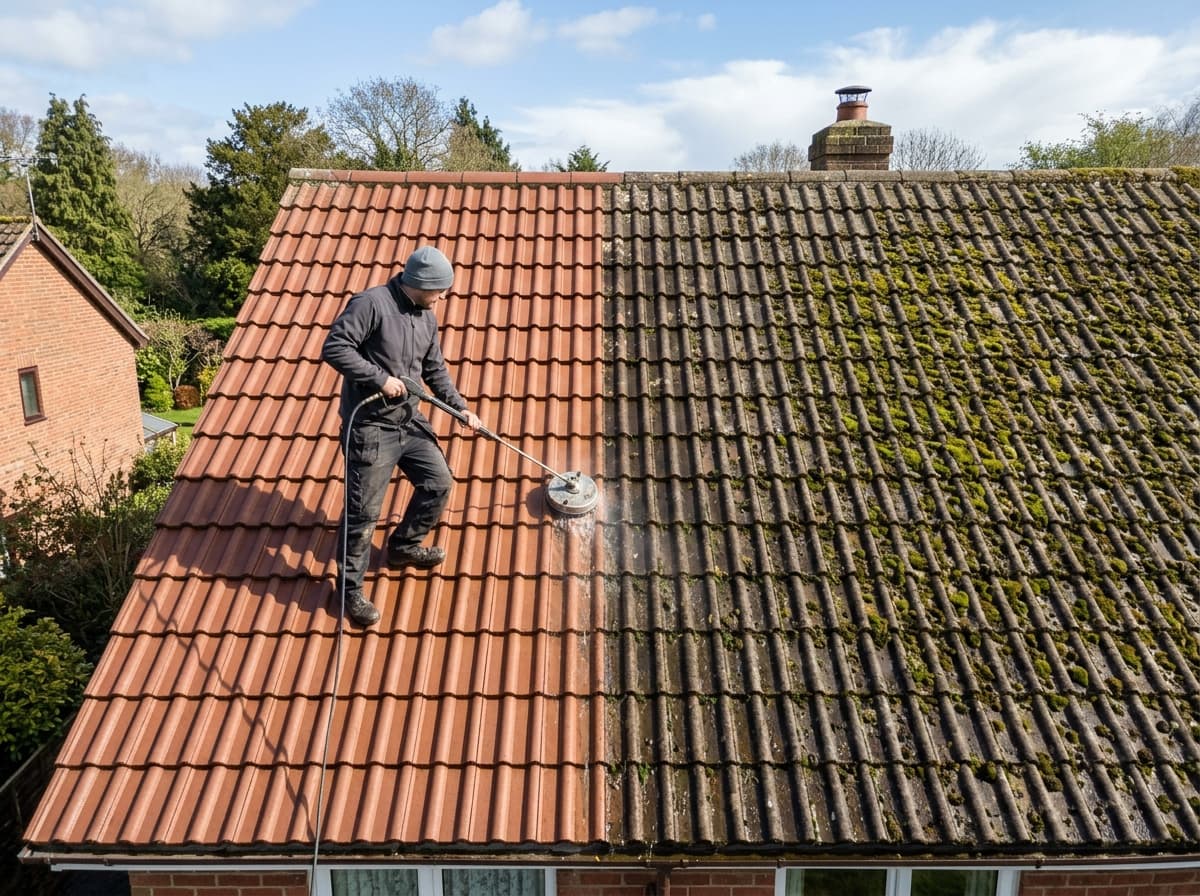
Roof Cleaning in Lavant
Removing moss and organic growth that traps moisture against tiles and can lift them over time.
Roof Cleaning in Lavant
Lavant customers looking for roof cleaning & moss removal turn to West Sussex Roofing. Moss and algae tend to establish on roofs that are shaded, north-facing, or sit under overhanging trees where organic debris collects in valleys and gutters and stays damp for long periods — a pattern that shows up right across West Sussex, from the wooded Weald villages to shaded slopes under the South Downs. It looks cosmetic, but moss holds moisture directly against the roof covering far longer than an exposed, quick-drying tile would experience, and as it thickens it can physically lift tiles at their edges and work into the gaps between them, turning a maintenance issue into a leak risk if left unaddressed. Removal is generally done by careful manual clearance rather than harsh pressure-washing, which can strip the protective granule coating off some tile types or force water under the covering; gutters and valleys are cleared at the same time, since that's usually where the debris that started the problem is collecting. Lavant sits at the point where the River Lavant — a winterbourne chalk stream that only flows in wetter years — emerges from the South Downs just north of Chichester. Being right on the edge of the South Downs National Park, the village is more exposed to wind coming off the open downland than Chichester itself, so older cottages with traditional clay tile and lead valley work need that exposure factored into how often they're checked, even though the treeless chalk slopes mean less moss and leaf debris than the wooded Weald further north.
Why Choose West Sussex Roofing in Lavant?
West Sussex Roofing brings the same standard of roof cleaning & moss removal to every property in Lavant, West Sussex. Removing moss and organic growth that traps moisture against tiles and can lift them over time.
Key Benefits
- ✓Manual removal rather than harsh pressure-washing, which can strip protective coatings or force water under tiles
- ✓Gutters and valleys cleared at the same time — usually where the trapped debris is coming from
- ✓Catches lifted or dislodged tiles caused by moss growth before they become a leak
What Affects Roof Cleaning in Lavant
Housing stock
Period flint and brick cottages across East Lavant, West Lavant and Mid Lavant, alongside more recent housing. Moss and lichen take hold differently depending on the roof covering — natural slate and clay tile on older Sussex roofs hold moss in a different way to the smoother concrete tiles common on newer estates.
Weather exposure
Inland — a chalk downland setting, no coastal exposure. Damp, shaded or coastal conditions all encourage faster moss and algae growth, so roof cleaning is a more regular necessity in some parts of West Sussex than others.
Planning & designation
Sits on the edge of the South Downs National Park. On a listed or conservation-area roof, cleaning methods need to be gentle enough not to damage historic slate or tile, ruling out overly aggressive pressure-washing.
Access
Open downland setting means less tree cover than wooded villages further north, but more wind exposure. Roof cleaning needs safe, stable access across the whole roof slope, which is planned around the property's pitch, height and the surrounding street or garden.
Roof Cleaning in Lavant — FAQ
It's more than cosmetic — moss holds moisture against the roof covering for much longer than a clean, exposed tile would experience, and as it thickens it can lift tiles at their edges. Left long enough, it becomes a genuine leak risk rather than just an appearance issue.
Shaded or north-facing roof slopes, and roofs under or near overhanging trees — common across the wooded Weald and many South Downs villages — stay damp for longer and collect more organic debris, both of which give moss and algae the conditions they need to establish.
It can — pressure-washing risks stripping the protective granule coating off some tile types and forcing water in under the covering. A local roofer will generally recommend careful manual removal instead, and can advise on what's right for your specific roof.
Roof Cleaning in Nearby Areas
Ready for Your Roof Cleaning in Lavant?
Book your free no-obligation survey in Lavant today.